Note to Readers: Large part of this article was an extract from my recently published book titled ‘PREDICAMENTS OF ETHIOPIA’S WARTIME ECONOMY: Political Uncertainty, Aid Politics and Macroeconomic Instability’, Pages 211-216. The book can be accessed for online purchase via Amazon sales platform following the link below:
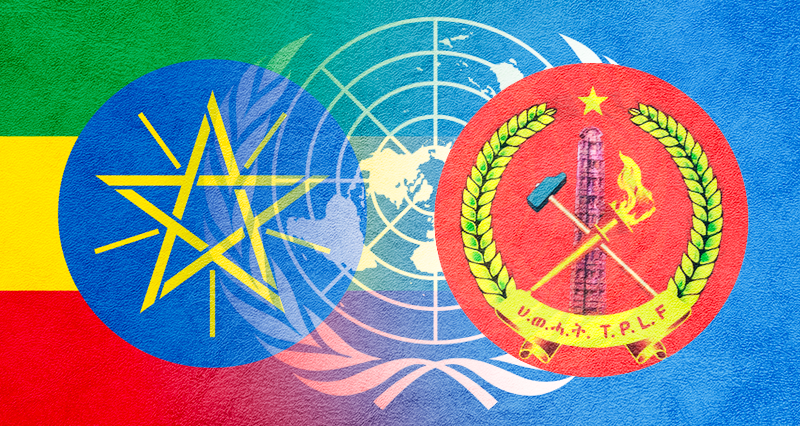
Introduction
To understand the growing rift between the reformist government in Ethiopia and the West, it takes to go back and look into the latter’s take on the political, economic & security reform in Ethiopia since 2018. The period marking the aftermath of political reform began can be characterized as when the US and its Western allies were ‘enthusiastic’ about the reform process in Ethiopia
However, such was unable to persist with changes in developments in Ethiopia ascribed to political, economic, diplomatic and security affairs. As the year passes, the Western powers emerged ardent opponent of the reformist government led by a Nobel Peace Prize Winning Prime Minister of Ethiopia, Abiy Ahmed Ali (PhD). A particular period to consider in this regard is November 4, 2020. The day marks the outbreak of a War in Tigray Region, whose tolls furthered to other parts of the country as has been a reality in the past 15 months or so
Indeed, ensuing developments since the war in Ethiopia broke are clear testimonials for the Western powers interested to work with TPLF. In this sense, it may be relevant to ask why, from the outset, the West allowed (endorsed) the departure of the TPLF/EPRDF rule in Ethiopia back in 2018. Emerging developments also triggers to inquire what factors contributed to an ever straining relation between Ethiopia and the West
This viewpoint article attempts to address the above two questions and related other points
What Strained the TPLF-led Federal Government and Its Western Allies?
In the relationship between TPLF-led government in Ethiopia and the Western powers, the year 2015 can be considered a defining period. The year marks the reemergence of nationalism and populism in major Western powers in Europe, the America and Australia. In Europe, nationalism raged the political landscape in France and UK. In US, there comes Donald J, Trump, whose leadership character governed by a mix of nationalism, populism and anti-establishment notions.
The distinct feature of Trump’s governing principles has led to the new term in the lexicons of global politics & governance, as Trumpism. Trump was of the take that the US has paid unnecessarily for the sake of global good, and he defined his presidency time when the country begins to look inside home. The pillars of Trump’s nationalistic governance built in making for economic monopoly of the US. As one consequences of Trump’s inward looking foreign policy line was disregard on the domestic politics in countries which are under the influence zones of the US, including Ethiopia
- TPLF dominated EPRDF’s Rule in Ethiopia– Victim of Donald Trump’s Foreign Policy?
Powered by the principle of America First, Donald Trump’s governance have had trumping effect against global agenda motivated by securing the economic monopoly of US from the global order. Trump is widely condemned for not compromising the short term economic gains of the US from the global order for the sake of the age old role of the country to ‘shoulder’ global causes. The policies of Donald Trump were such influential that its effect has had far-reaching consequences whose effect engulfed countries all the corners of the world. The foreign policy of Trump has changed international terrorism and security agenda subsidiary to the economic benefits of the US.
One of the changed faces of the US policies changed the horn of Africa region in many ways. A particular note is how Trump’s moves brought about regime change in Ethiopia in 2018. The age old ally of the West, the TPLF-led government in Ethiopia has put to end with the ‘endorsement’ of the Trump administration.
Trump effect can be considered both negative and positive shock to the world at all. The newer dynamics have some positive outcomes, particularly on the sovereignty of countries in the peripheral world. Many developing countries seemingly fetched out of the newer global dynamics where they garnered greater autonomy on their respective countries’ interests. That, in particular, is appealing to developing countries in Africa and Asia, including Ethiopia where they relieved of the hasty interventionist policies of the US on internal politics and sovereign status of countries in making for international relations.
The Trump effect can also be regarded a negative shock to developing world, including Ethiopia. It was consequential in decreasing developmental & humanitarian aid Ethiopia has been getting from the US. Moreover, the Trump policies brought the reemergence of competitive interests of the US on geopolitical affairs with contending global powers, like China and Russia
A particular policy of Trump in this regard goes to his government’s ambitions to reducing the expansion of China in the African Continent, and in the horn of Africa in particular. For decades, the Ethio-American relation was defined on shared interests in the fight against international terrorism. That, however, has changed where US now resorted in geopolitical matter most, with motives of curbing the ever rising China in the global economic, political, security and military arena. The US has changed its Africa, where for long the country has remained dormant in ‘exploiting’ the economic opportunities from the continent
Indeed, Trump’s foreign policy has affected Ethiopia’s ties with the two global powers, the US and China. The competitive interests of the two countries emerged with the coming to space of America First principles of Trump’s administrations. That, in turn, has required the TPLF dominated government in Ethiopia to choose between USA and China. The case with USA is quite interesting. Circumstantial evidences in the years between 2016 and 2018 suggest that Trump has not given Ethiopian government a time to think over of restraining strong ties with China. Perhaps, the quickies of Trump has annoyed the smooth relations between Ethiopia and the US, and has a lot in it in explaining why the US endorsed the departure of TPLF from its front line position in the Ethiopian and Horn of African political space
If there is one assertion for the end of TPLF rule in Ethiopia, it was changed policy of the US government led by Donald J.Trump. The European states and the US were not moving on the same directions on key global and regional security, economic, environmental and geo-political agenda. One such disparity was how to deal with the political and security issues in Ethiopia. The Europeans were marginalized and set to be spectators on Trump’s government actions against the TPLF dominated regime in Ethiopia.
The outcomes from sending back of TPLF regime in Ethiopia in line with strategic interests of the west was not much thought about. That ascribes to quickie policies of President Donald Trump
 ሩህ ሚዲያ - Ruh Media
አስተያየት ያስቀምጡ