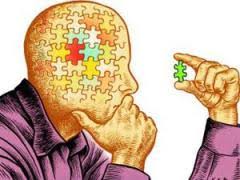
The Essence of Rational Selfishness
Habtamu Girma, Lecturer at Jigjiga University, Department of Economics.
Note to Readers: Part of this Article was first Published on August 13, 2016 by The Reporter Ethiopia, Addis Ababa based Weekly Newspaper. It can be accessed following this link for online readings:
https://www.thereporterethiopia.com/content/attempt-redefine-individualism
Introduction
Perhaps, no other people than economists, are more concerned with the concept of individualism. In fact, mainstream (orthodox) economic theories are designed based on the rational actor model. At the heart of the rational actor model is the notion of individualism. As a byproduct of this economic modelling, orthodox economics and neo-liberal economic orders takes individualism a pillar in their theorizations and policy prescriptions. Though colorful and smart looking, however, those teachings and policy recommendations has been criticized in many terms, particularly since the last two decades or so. This article argues that all those woes against mainstream (orthodox) economics is due to the ill-defined individualism that its theories and policy prescriptions rooted upon; and pin points redefining individualism as a way out. Moreover, this piece attempts to forward brief sketch into the whereabouts of the short comings of orthodox economics; pinpoint consequent socio-economic end-ups of conventional economics and highlight how the re-statement on individualism would mitigate the drawbacks of mainstream economics, both in theory (academic) and practice (policy) fronts.
What is missed in the Theory and Practice of Orthodox economic Thought?
Critics say mainstream economic theories are irrelevant to contexts of developing countries, with their lines of argument resting up on the following, among others: the very assumptions of orthodox economics like rational actor model, assumptions of well functional soft and hard infrastructure, full-fledged legal and institutional set-ups, etc…. do not feature the contexts of developing countries. In the policy fronts, neo-liberal economic order is condemned on similar grounds: where critics puts neo-liberalism a device whereby the western world sustains its colonization against the other world, a systematic tool to effect the so called ‘post-modern colonization’. In the earlier days, where the western world a sole super power, challenging mainstream economics was punishable harshly. In the academic front, those who make ideological critic on neo-liberal teaching were fired from colleges, and even from academia. In one of his interviews, some 12 years back, a well acclaimed Ethiopian economist professor Birhanu Nega said that in U.S.A academic politics was even intense than the state politics. In the policy dimensions, countries were forced to swallow the neo-liberal policy guidelines as part of their economic policies, a string attached to get access loans and aids. Overall, neo-liberalism, both in its theory and practice, is condemned for rigidity, and its ‘one size fits all’ principle
Classical Thought on Individualistic Motives
Economists define individualism as one`s lust for material gain. The famous British political economist, Jeremy Bentham, modelled human nature as governed by pleasure-pain calculus. This modelling puts human kind as an entity that chases pleasure and shy off pain. Such understanding of human behavior is what the mainstream economics is rooted upon. Accordingly, classical economics, the ideological foundation of capitalism (neo-liberalism), connotes that it is material gain or loss what defines pleasure or pain.
But it is wise and appropriate to ask: does the only means to pleasure is a material gain? Are there not instances where people may (in fact they do) forgo material interests for their ends i.e. pleasure? Do pleasure-pain modelling of human behavior explains such circumstances? Conventional definition of individualism do not have a complete answer for those quests, calling for revision of individualism.
It is true that the end goal of people in life is to gain pleasure, and avoid pain. However, material gain do not necessarily justify pleasure as there are occasions where material loss may justify pleasure too. The famous pleasure-pain divide is unable to explain why some people prefer to scarify their material gain to gain pleasure. This makes the Pleasure- Pain divide blurred, which in turn leaves the conception of individualism unclear. All in all, individualism defined based on the pleasure-pain calculus is incomplete, if not right. In other words the famous classical notion of rational actor model (which is powered by the philosophy of pleasure-pain calculus) and the implied inferences and/or policy regimes are subject to doubt. Hence, the conceptions of mainstream economics on individualism has to be revised.
Individualism Redefined: Individualism Proper
No doubt that the end goal of every activities of a human kind is to maximize welfare and minimize pain. The key aspect here is as to how people gain (acquire) pleasure (and hence try to avoid pain). Not missing the point that conventional understanding of individualism is blurred, this article eyes an alternative to pleasure-pain divide in a bid to redefine individualism in more complete form, which I shall call it individualism proper.
In contrary to the conventional definition of individualism, which focuses only on material assets, individualism proper connotes for both material and spiritual assets. Therefore the motive behind individualism lies not in the realm of material gain only, but also in spiritual elements too. Therefore, the virtue of individualism rests upon material-spiritual calculus, instead of pleasure-pain calculus. Such understanding of individualism is the first step in re-defining the notion of individualism, and hence understand what individualism proper is all about.
Explaining the material-spiritual gain requires clearing one bar: defining the possible interrelation between material gain and spiritual gain. It is my perspective that the possible links between material and spiritual gain may take three forms: competitive, complementary, or unrelated. When material satisfaction and spiritual satisfactions are intersected, material satisfaction may results into spiritual satisfaction, or the other way round. Where the two assets are unrelated, material gain do not compromise the spiritual gain or the other way round. There are times when material gains and spiritual gain may go in conflict, making the decision to locate oneself to material or spiritual element difficult. Under such instances, spiritual gains should get the priority: for one, spiritual satisfaction is enduring than material satisfaction; besides, spiritual gain is a pre-condition to material gain.
Dimensions of Individualism Proper
To better understand self-interest, individualism proper establishes three interrelated dimensions:- the socialistic dimension, moralistic dimension, and spatial & time dimensions. The particular nature and implications of these dimensions integral in individualism proper endows individualism proper flexibility character, a trait conventional individualism seriously lacks. The flexibility character of individualism proper reveals itself in reasoning out and hence explain instances when people deliberately scarify their material interests to achieve pleasure (satisfaction). All in all, individualism proper widens the scope and motives of self-interest, resulting a broader and holistic understanding of individualism.
Socio-Cultural Dimensions
The rationality assumption of conventional economics, which considers people are individualistic and hence act with no bothering about the social and cultural influences they may face, is far less realistic. Such a look relegates socio-cultural and religious elements in economic life of people, despite their importance. Moreover, this fallacy is the source of corrupt understanding of individualism.
Socio-cultural and religious values like: social norms, customs, cultures, beliefs, religion are powerful forces in governing the economic life of people. As human is a social animal, people cant escape the influences of socio-cultural elements and considers all these components into consideration in their economic transactions. By sticking to these values, people are enhancing and sustaining their economic gains, which in fact amounts to self-interest. When we say peoples conducts in economic life is shaped by socio-cultural and religious entities implies people values these entities.
It is ones creed to his/her values that defines his/her individualistic nature. Possession of values is what defines the rationality of people, and how far people are loyal to their values would tell the extent of their individualistic character. In general, at the heart of individualism proper are Values
The Moralistic Dimensions
In the context of individualism proper, the aim of self-interest is to maximize material and spiritual gain. In pursuit of that, people always try to live up their values. As values are subjective, i.e differ from people to people, we limit ourselves in the realm of moral values, which in fact shall be understood on grounds of humanity and equated accordingly. The moralistic dimension of individualism proper is its presumption that people are in many cases determined to living up their moral values. By doing so, they maximize their economic wellbeing. The key issue here is to look for how ones determination to surrender himself/herself to his/her values boost up material gain. People live up their values means they never go into conflict with themselves, meaning they gain inner peace. People live up their values means they fulfill the pre-requisites for success i.e mental peace. Once we are in such state of mind, we are able to develop the three ingredients of success in material life: free mind, vision, spiritual strength or courage (industriousness). Hence, lust for once loyalty to values is individualistic move (self-love), and is instrumental for prosperity.
According to individualism proper, there is a room that self-interest and altruistic values go parallel. If one values altruism (i.e if it is genuine, not in fact for mere show-off) it is action for self-satisfaction, or fulfilling self-interest. By living up this value, an altruist person is self-interested as well; to borrow some words from Aristotle, altruism is rational selfishness. Therefore, if people seems to scarify their material life, that is a civilized (strategic) retreat from material interest, for it is a retreat to comfortably and sustainably grab material gain
Spatial and Time Dimensions
Socio-cultural environment is different among communities, and the values of people change with time. Hence, values are subject to variation among people belonging to different communities; their motives in their economic life i.e their self-interest changes through time too.
Overall, sticking to individualism proper will address the roots of doubts on economic theory (economics discipline) and practice (economic policy). As such, economic theorizations and policy outcomes of individualism proper will scale-up the socio-economic welfare of people.
Individualism Proper: A Better Way to Economic Theory and Practice
Given the fact that orthodox (mainstream) economics, powered by conventional individualism, has been powerful in shaping economic theory and policy for long, the re-definition of individualism in the sense of individualism proper has a number of implications. In the academic arena the teaching of economics needs redesign in terms of content and approach. Content wise, a single economic theory and/or model might not work at all times, at all places. In terms of approach, deductive approach, the dominating school in mainstream (orthodox) economic thinking should at least be complemented by (if not, give way to) inductive reasoning, in the construction of economic theory and modelling.
From policy perspective, individualism proper connotes for a revision of the policy regimes mainly one size fits all principle of orthodox economics, calling for contextualizing economic policies to particular economies` socio-economic, political, ethico-religious and cultural contexts.
Individualism Proper: A Better Way to Promote Wellbeing of People
How Individualism proper promote the welfare of people could be best illustrated by looking at the drawbacks of conventional individualism, as the weaknesses of individualism in its traditional sense are the strengths of individualism proper. The practical example as to how ill-defined individualism affect the people by depriving their economic and social enterprises can be seen by looking the American society.
Gauged by the scale of materialism, the Americans are the most individualistic people in the world; at the same time, they are the most altruist people on earth. The Americans cherish their individualistic values the secret of their economic prosperity. However, the American form of individualism is problematic, as it never fits the human nature. Indeed what defines humanity is not only the material life, but also the spiritual life. The Americans ignored or missed the spiritual values at all. That is why they are not as prosperous socially as they are economically.
I can say the American society is the most socially deprived one in the world. The American society do not allocates the necessary time needed for social business, making the society poor in social capital. The ill-defined individualism they worship has left the Americans to multitudes of problems. Over emphasizing the material world and ignoring the spiritual assets, the American society is most infected by the disease called- stress. Stress is the mother of not only every biological disease, but also of many social diseases ranging from drug abuse to robbery to serious crimes to terrorism.
The institution of marriage, which is the basic construct in the formation of society and country, is most damaged by the notion of ill-defined individualism. According to one research, an average Americans dual income couples talk to each other only 12 minutes a days.
Exaggerated attractions of Americans to material assets exposed them to arrogant businesses, which uses advertisements as a tool to play their game. Perhaps cheated by these advertisements, most Americans are affected by such habits that going to the markets for commodities which are not necessary to them. Over-purchase habits, especially in food items is seen as the average American family dumps down 25% of the food stuffs it purchases. The per-head consumption of drug makes Americans the highest consumers of ‘bads’ in the world.
A philosophy to convert economic prosperity into social stability is farfetched. Trying to treat social diseases by economic tablets will not bring a lasting cure except helping relieve the pains associated with the symptoms. The Americans may have a material resource to treat their disease. Yet they are treating simply the symptoms, not the causes of the diseases (both biological and social diseases) they are suffering from, which is stress. They don’t get the cure unless they treat their mind sets and redefine what meant by self-interest in line with individualism- proper.
It is worthy to understand that self-interest, in the form the Americans understand, can potentially hamper economic progress. At the state level, government investment to treat social evils ranging from drug trafficking to robbery would create huge pressure on the economy. Richard Nixon, the president that ruled U.S .A between 1964 and 1974 has spent more than $ 1 trillion to fight drug abuse. The U.S has the highest incarceration rate in the world, spending billions of dollars to care for prisoners. Fighting terrorism has cost U.S.A trillions of dollars in the past decade.
An average American spends much time and more money to medication than anyone anywhere on our planet. More money spent for medication means fewer resources for productive investment; time reallocated from work places to hospitals means fewer hours on work, shrinking their income and productivity. By living up individualism proper they will not only bring social prosperity, but also enables them at least to keep up the economic prosperity they enjoyed already.
All in all, if we understand and adhere to the principles of individualism proper, we are in a better position to recognize how to build our material, spiritual and emotional assets, promoting socio-economic prosperity.
 ሩህ ሚዲያ - Ruh Media
አስተያየት ያስቀምጡ