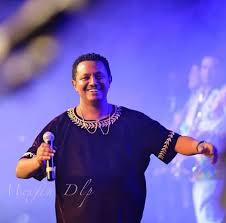
Habtamu Girma, Jigjiga University, Department of Economics
For Readers: Abridged version of this piece first appeared on Ethiopian Reporter Newspaper, dated 20 May 2017. Online readings from original source can be accessed from this link: https://www.thereporterethiopia.com/content/teddy-afro-more-singer
Introduction
The music world has witnessed something strange in this month, May 2017. On the first week of the month, the billboard world music chart, a medium that tabulates the relative weekly popularity of singles or albums in the world, listed atop a single from unusual country. With no other Ethiopian name has appeared on billboard chart so far, Tewodros Kassahun a.k.a Teddy-Afro- became the first Ethiopian singer to a twin-record, for his work ‘Ethiopia’ achieved to achieve in a billboard list and ranked first. The record breaking song was the title of his 5th music album of the artist released three weeks before, with a message depicting the greatness of Ethiopia-calling all Ethiopians to unite and be loyal to one flag. The album has secured more than 600,000 copies of sale so far with the name ‘Teddy-Afro’ grabbing major global news and entertainment giants like BBC, Associated Press (AP), Washington Post, Yahoo News, among others.
A singer who combined artistic talent with great cause and personality, Tewodros Kassahun is controversial singer as his songs speak louder going beyond private affairs carrying messages often interpreted political. The life of such public figure is always far from beings still, swinging back and forth (like a pendulum) to touch the smooth and rough. Giving a brief look into the life and works of Tewodros Kassahun, this peace tries to take out inferences in line with the current political vibe in Ethiopia.
Who is Teddy Afro?
King of Ethiopian modern music of his generation, Teddy Afro was born July 24, 1976 in Addis Ababa, the capital of Ethiopia to his father Kassahun Germamo and his mother Tilaye Arage. With multiple artistic talents as a singer, song writer and a poet, he is a figure who represents astonishing musical talent coupled with great personality. Teddy Afro as we know him today is a product of his family and his grow-up. His parents were involved in arts, where his father was stage conductor of a traditional Ethiopian dance and his mother was a dancer. Tewodros Kassahun brought up nurtured with art, meeting with friends of his parents who were great figures of arts including Tilahun Gessese, the giant name in Ethiopian music.
Teddy as a student at New Era School was also important in shaping his personality. Located off Menillik II avenue, one of living symbols of Addis Ababa named to honor Emperor Menillik II a king that ruled Ethiopia reigned from 1889 to 1907 who uncontestably credited for turning the history page defeating the interests of European colonial powers over Ethiopia by defeating the Italian forces at the battle of Adwa in the year 1896, is a standing testimony of Ethiopian pride. In his interview some three years ago, seeing the monument of Emperor Menillik II virtually on a daily basis while going to school takes the genesis of values the artist is living for – Ethiopian pride, unity of its people in love and brotherhood.
Teddy Afro – Using Art a Weapon to Outpour his Causes
In his mediums, be it his songs, music concerts, interviews or the social media, Teddy Afro is a solid figure towards Ethiopian identity, who consistently spoke of Ethiopian pride, unity of its people in love, peace and togetherness. Teddy-Afro using his artistic talent as a weapon is able to win the hearts and minds of millions of Ethiopians. History and great Ethiopian names are his mediums to mention greatness of Ethiopia and call for unity of its people. A glance into musical works of Teddy-Afro shades light on core historical incidents from ancient to the recent. In his subsequent musical works, Teddy-Afro honored Ethiopians who took the name ‘Ethiopia’ to international arena and flagged high-the-mast emblem of the country: the green, yellow and red by their bravery and/or excellence in their respective careers.
The artists call for the Ethiopian unity is as old as his music start-up. In his debut, ‘Lebbo’, there is a song entitled ‘Yehagere Nafkot’, carrying message on his deep affection to his motherland. He was consistent towards his causes in his subsequent music albums.
Teddy Afro -into Fame
Teddy Afros debut is entitled ‘Lebbo’. Though it was completed earlier, it was not released till 2001, just when he was about to release his second album, Abodgida. Not more than 18 or 19 when he release his debut the tracks, however, taste melodious beyond his age and musical experience, artistic enough to grab ears afresh even today. Teddy cried foul for not paid for Lebbo album.
What has taken Teddy-Afro to fame was Abogida, his second album released in the year 2001. Abogida consisted mix of tracks with diverse genres to include Reggae and Rock &Roll, quiet a strange in Amharic music scene before.
His third album is Yasteseryal. Released in 2005, Teddy-Afro appeared with songs having musical substance to fit the fame and rank he earned in his previous works. The time he released his album being the eve of the infamous 2005 national election ended in controversy and public uprisings, I remember (as a high school boy by then) the power and sentiment of the album, with songs like ‘Yasteseryal’ and ‘Etege’, taken for granted the ‘sound tracks’ of the then political upheaval, whose vibes still bears in my mind.
In the aftermath of the release of his new album, Teddy-Afro faced criminal charge from federal prosecutors for alleged manslaughter, a hit-and-run incident that killed a pedestrian, an accusation he always denied. His detention ended in bails where he has been followed up his case while performing recurrent music tours across Europe, Americas and Australia. In the year 2008, the music king has left the studio and the music stage to spend in a prison compartment, which he was released on pardon after 18 months of effective imprisonment.
Teddy Afro Freed from prison was quick to appear on the stage to see his fans. Looking fresh beyond imagination, both physically and spiritually, his music concert was to thank his fans and lovers who showed their loves to endow him endurance in his prison years. Consistent as he is always, Teddy remained dedicated to his cause: unity, love and peace of Ethiopians. In the months and years followed, Teddy underwent with busy music trips all over the world to thank his fans abroad.
On the eve of his fourth album, Teddy engaged with an Ethiopian actress and model, Amleset Muchie. As he is always reserved to take himself and his family affairs public, Teddys marriage was far from media coverage and little is known about his marriage affairs, except having two babies from his wife. With a new life adding responsibilities to handle family affairs as husband and a father even added to his creativity as proved in his musical releases afterwards. In the year 2012, Teddy Afro appeared with his new album-Tikur Sew. The name of the Album, Tikur Sew commemorates the Great Adwa Victor, the war between Ethiopia and Italy heroes. The song particularly hails the war-in-chief in the battle, Emperor Menilik and some of his major generals who showed their dedications to the pride of their country defeating the Colonial interests. His new album, Tikur Sew was quick to draw the attention of millions of Ethiopians in all walks of life, be it ordinary citizens who loves music, his fellow musicians (singers) or others in the entertainment industry, and those having different political interests living within and outside of Ethiopia. Equally important to Ethiopian art (music) sector, Tikur Sew went beyond having political implications for it was has shown us how polarized the Ethiopian political landscape was(which still seems to have not altered). The two polarized groups at the forefront for a showdown via Tikur Sew were those who consider Emperor Menilliks expeditions as an act of aggression, same as colonization on one hand and those who consider the kings moves as part of his nation building project, considering his marches a holly war. In those showdowns, Tewodros Kassahun was to turn one time a hero and other time a zero. While one goup hailed him massively, he had to endure fierce critics which often went an insults to the disgrace his personality. Teddy Afro has encountered a particular set back from the Oromo nationalists, who always accuse Menilik as a colonizer of Oromo people, brutally killed the lives and identities of the Oromo people. With the onset of social media revolution in Ethiopia in years to come, Tikur sew was beyond a music album, which helped reveal the mindsets, stands, consciousness and knowledge of ordinary Ethiopians on their countrys history and politics.
In the years before his latest album, Teddy Afro recurrently released singles, the likes of Seba Dereja and Alhed Alegne.
Teddy Afro’s Fifth Album, Ethiopia: What’s New?
Though rumors heard Teddys fifth album to be released as far back September 2016, he did it on May 2017. For me, his new album Ethiopia a glamour to the Ethiopian art endowing a lot newer. But ‘what is new about Ethiopia’? Humbly leaving for an in-depth artistic look for music critics like Sertsefire Sebehat, a man whom I admire most for his musical expertise, I put forward some to the limit of my understanding of music, which one may take for granted as view-points, not critics.
Referring to his past musical works, it was my position that Teddy Afros economies of scale (expertise) was much to melody than the lyrics, and with Ethiopia he showed he is equally smart on both. What is new about Teddy-Afros Ethiopia is that its addition (to Ethiopian arts) goes beyond music to have contributed to the development of Amharic language and literature too. In this regard, a particular importance goes on the way to structure lyrics. Teddy-Afro appeared with such extraordinary artistic lyrics that show expressive power of Amharic language in general.
Some other new in Ethiopia is that it has transformed the way to compose the traditional Amharic music beyond the conventional style. This in particular appeals to his songs entitled-‘Mar Eske Tuaf’ and ‘Atse Tewodros’- with respective beats appealing to traditional Gojjam and Gonder songs style. Content wise too, Ethiopia brought some new, perhaps unprecedented in Ethiopian music plays so far to turn ‘a book’ into ‘a song’. His ‘Mar Eske Tuaf’, a musical work which summarized a 552 paged (as per the 2012 edition) classic Amharic novel by Haddis Alemayehu, entitled ‘Fiker Eske Mekabir’ (roughly mean ‘Love till death’) in seven minutes and twenty seven seconds long song. What makes Mar Eske Tuaf special is the idea to turn such monumental novel in modern Amharic literature with multiple importance into the music scenery. With the direct narratives of the book tells readers the depth of love with two of its main characters- Bezabehe and Seble Wongel, ‘Fiker Eske Mekabir’ inscribes a lot many, having socio-economic, political and historical importance in modern history of Ethiopia. From socio-cultural and historical perspectives, ‘Fiker Eske Mekabir’ could be regarded as depiction of values, norms, beliefs and tradition of the people Gojjam Amhara. From historical, political and economic lines, the book portrays the workings of the Ethiopian politics and the economy under the imperial (feudal) regime.
More astonishingly about Mar Eske Tuaf is that its lyrics is structure in a way to expressive of the novel along with its major characters. Worth mentioning is how Teddy-Afro artistically mentioned the names of key figures associated with the novel like the author-Haddis Alemayehu and artist Wogayehu Nigatu, who is celebrated for adding more life to the novel in his narration which repeatedly aired 1980s 1990s on the Ethiopian National Radio Service to attract millions.
Teddy Afro-A Man with Great Personality
To connote people men of works, there is an English saying- Men has to live in deeds, not in years’; to depict the yardstick to gauge ones greatness, there is this: ‘what matters is not fame (power), but how to exercise power. If we have consider the two gauges of great personality, Tewodros Kassahun deserve to be a great figure. A glimpse into Teddy Afros musical career and his private life attests that speaking louder he is mature professionally and personally beyond his age. Teddy Afro has also proved to be mature (worth trusted) to possess power for he has shown what it takes to assume a status of ‘great man’. Teddy knows how to deal with the pros and cons of fame. With his fame given him power of different sorts; In all his possessions of power, be as influence or money, he is enlightened enough to pass across testing hurdles. His life in the past and present I a testimony that he cant afford to trade his private interests for public benefits (causes), which his own ways (beliefs) remained unaltered other than outpouring for the unity, love, brotherhood and peace of all Ethiopians.
Teddy Afro’s Plea for Political Openness-both Timely and Appealing!!!
In his recent blog, an Ethiopian academic and social scientist, Professor Fikre Tolossa wrote on why Teddy Afros musical fame, and came up with a conclusion because ‘his songs call for unity of Ethiopians’. Whether this hypothesis is true or not get a resolve with an in-depth inquiry or study, the professors note is a reminder that the causes of Teddy Afro is grabbing the attention of such seasoned historians and scientists like Professor Fikre Tolossa, which I expect others to follow.
In this regard, his recent interview with Associated Press (AP) is worth considering having a lot in it to speak about the political landscape of Ethiopia in the past, present and future. Asked by Flash News regarding the present Ethiopian political vibe, Teddy Afro replied: “The tendency nowadays in Ethiopia is to mobilize in ethic lines, not ideas”. What one can take out of this view is one- a political stand calling for individual freedom. As vivid as we are witnessing it today, such a political view has been fading since the year 2005, with some prominent opposition parties voicing for it weakening, losing even a single seat in the parliament with 547 seats. Teddys assessment has substance. Many are responding and/or commenting their inferences in their own ways. The core issue for me is how contradict (complement) Teddys view to the political goals of the ruling regime, the Ethiopian People Revolutionary Democratic Front (EPRDF), which has taken revolutionary democratic lines their principles. In my own assessment, as depict below, the two are at most complementary; or doesn’t contradict at least in lieu of the theory and practices of revolutionary democratic rule in the past, present and future.
In its political teaching, revolutionary democracy end goal is to level the political and economic landscape to be able to exercise liberal democracy, whose political and economic pillars are built upon individual right than group right. Revolutionary democratic political philosophy leans upon historical relation among the people of Ethiopia, where the Amhara culture, language and main religion (Orthodox Christianity) dominated particular identitiese of other nations and nationalities and people. The political economy in the past was also responsible for creating economic inequalities characterized by spatial difference (rural Vs Urban) and among regions (districts). Hence, Revolutionary democrats staunch about fixing those historical, socio-cultural, religious, political and economic breaks precedes, arguing fixing those fractures is fundamental to maintain the unity and national integrity of Ethiopia. Hence, they adhere ‘group right first’ the philosophical construct of their political governance.
In the past quarter of a century since 1991, revolutionary democratic lines of political governance has brought remarkable achievements were registered in promoting group rights, particularly in addressing those issues like developing one`s own culture & language, also on religious freedom. Thence, it is a natural political process for people to graduate from their political questions based on their respective group identifications (ethnic & language) to go idea centric (individualism) their firsthand political questions. On top of that, the changing faces of the political economy of Ethiopia by itself triggers for a political updates in those lines. With the advent of capitalism, rapid rate of urbanization and the spread of higher education typifying the Ethiopian political and economic scene since the last decades or so, it is inevitable that growing quest for individual right, implicating for a likely evolvement of individual identifications over group characterization.
The fact that group rights have got a full respect in the current political setups of Ethiopia has been reckoned repeatedly by many political pundits, even to the confession of the ruling EPRDF. For instance, Addis Raey magazine, a platform that displays the ideological (political) positions of EPRDF in its Megabit-Miazia 2008 E.C edition depicted ‘the identity issue in Ethiopia has resolved’. Bereket Simon, one of the heavy weights of EPRDF (on a forum staged by the ‘Fana Broadcast Corporate’ around July or August 2016) spoke of the quest for identity, cultural right and self-rule of nations, nationalities and peoples of Ethiopia is an issue which has resolved already.
Teddy Afro: Guilty for Pleading a more Political Openness?
Aged 40, only a 14 years old boy when EPRDF seized power in 1991, Teddy Afros political stands or conceptions are either reflections or products of the political governance of EPRDF. Looking at the political economy of Ethiopia in the past two decades or so reveals two scenario, both connoting the Ethiopian political landscape to get an update to accommodate idea centric political groups, if not embark on the process of graduating from ethno-centric to idea centric. In both cases, Teddys position is natural element to expect to come out of the system in both scenarios. If we assume Teddys conception is the product of the system itself, that means the system is credited to help him graduate from ‘group mentality’ to ‘individualism’, hence celebrate idea over ethnic lines. If Teddy was not supporter of group-right first principle of EPRDF from the outset, our time triggers for such thinking at least not to be crushed. So, Teddy Afros call for political openness is timely, for his view fits the features our time as our analysis on both scenarios takes us that- ‘it is high time to challenging the sole monopoly of a political system by ethno centric political groups (parties)’.
What it takes from Revolutionary Democrats?
One thing the revolutionary democratic rule shall be clear with is that those who caters to this philosophy are growing large (and expect for an even higher) to require political representations. At this juncture, at least in my own assessment, this new social class is likely to be large enough in comparable with the size of some dominant ethnic groups in Ethiopia. In one a recent informal discussion I had with one friend of mine, he estimated the new class which prefer individual identification over group identification to be more than ten million. Ignoring the exact figure (number) for a while, given the fact that the urban population of Ethiopia is estimated above 20 million and the emerging social class which prefer individual identification appeals largely to urbanites, one can make a the ten million estimation is a reasonable guess.
How Important is Teddy Afro’s Ethiopia to Heal our Fractures?
Again, I argue that Teddy-Afros plea for more openness to questing a political reform is the product of the time itself-a fundamental question our time seeks an address. Given that the major players of politics in Ethiopia are not people but the political elites, the answer to those quests is a firsthand responsibility of the political elites both on the rule and opposition sides for a response. (It is my belief that Ethiopian people are taken passive by their leaders throughout history not to dare to challenge leaders or politicians, a reflection of which we are seeing on the current generation).
Having said that, the relevance of every endeavors our generation must be judged in their importance to bring Ethiopians together narrowing down grievances by helping relieve historical mistakes and on restoring (or maintaining) the pride of the country. Hence, artistic works like Ethiopia of Teddy Afro or other works of Ethiopian youth in their respective expertise ought to be one which takes our minds and souls free, hence help Ethiopians (particularly the youth) get consciousness so that they hate the hatred, revenge a revenge, The current generation also need to get nurtured with the role and importance of history in maintaining and even further cement the cohesion of all Ethiopians, a force strong enough to withstand any move or incident inflicted to weaken (detach) our connections. All in all, what is takes from Ethiopian in every capacities and expertise is to emphasize Ethiopian youth remember how we shared all we have including our lives to endure those years of our misery and dark.
Therefore, if I have to consider the importance of Teddy Afros musical works, it is their importance in endowing us those traits. More important of all, Teddys Ethiopia is a reminder to our political elites (both in rule and opposition) the need to cleanse their minds from revenge, hatred and grievance, the three archenemies of the people of Ethiopia, responsible for eroding their unity and impeded their progress in all aspect of life.
 ሩህ ሚዲያ - Ruh Media
አስተያየት ያስቀምጡ