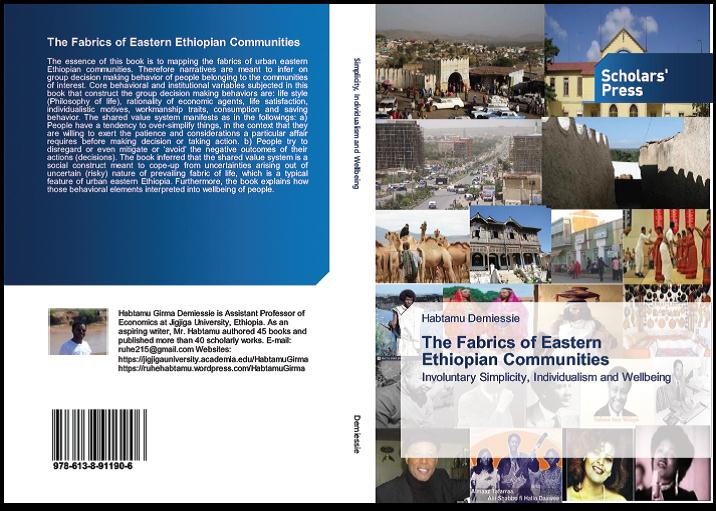
• THE FABRICS OF EASTERN ETHIOPIAN COMMUNITIES

    INVOLUNTARY SIMPLICITY, INDIVIDUALISM AND WELLBEING

    Author Habtamu Girma Demiessie, Assistant Professor of Economics at Jigjiga University

    SUMMARY ON THE BOOK

    The essence of this book shall be understood for being thought provoking work. The bulk of narratives lies in hypothesizing and attempting to justify on behavioral and institutional elements shared by people and/or communities of eastern Ethiopia. To that end, the whole set of narratives were in line of addressing the followings: a. Is there a value system (Philosophy of life) shared among communities within eastern Ethiopia, as reckoned in the book simple life style in eastern Ethiopia settings? b. What are pillars and peculiarities of simplicity in eastern Ethiopia settings? Or what are behavioral and institutional elements of valued lifestyle? c. How the concept of simple lifestyle interpreted into hedonic, eudamonic and affective wellbeings of individuals? d. How shared lifestyle implicated into key variables to wellbeing of communities: the incentive system, individualism, consumption, saving, the nature and workings institutions (both formal and informal)? e. What lessons the academic circle and policy practitioners draw in their respective endeavors aimed at promoting the wellbeing of people and communities? f. How better policy regimes can address community development and collective wellbeing in general and in the context of Eastern Ethiopia in particular?
    In an effort to address its objectives, which are outlined above, the book relied on three interrelated approaches of making inferences i. ethnographic approach ii. technique of characterization, comparative analysis & conceptualization iii. Formative research approaches.
    Ethnographic account was by far the core technique of inference on the essence, pillars, nature and workings of shared norms and value system amongst people belonging to communities of eastern Ethiopia. Those efforts were consolidated by theoretical and empirical evidences gathered from host of fields of social science and strands of thouguts: conventional (orthodox) economics, institutional economics, behavioal economics, postive psychology, social psychology, economic sociology, social anthropology, economic anthropology, business management, behavioral geography, history, among others.
    In a bid to frame, consolidate, identify and explain on peculiaities of shared behaviroal and institutional elements, a technique of characterization, comparative analysis & conceptualization was used. As such, a comparative look across different socio-cultural setups, value systems, social structures, faiths (religions), systems of governances, livelihood systems, family types & structures, generations were made.
    In its formative aspect, the book tried to take inferences on possible implications (to wellbeing of people and communities) of shared behavioral and institutional elements.
    As source of information, the book relied upon both primary and secondary sources. As the author is involved in the community for a decade, personal observations was vital source of inference. Moreover, the topic at hand was tabled for discussion and debate on the Third Annual Conference on Eastern Ethiopia Economic Development, which was held in Jigjiga city in November 2014.
    The book forefronted that there exists shared lifestyle among people belonging to east Ethiopia communities. The shared lifestyle is result of common background of those communities in the past and present, in terms of variables in the domian of socio-cultural, belief & value system, economic, governance, geo-political, among others.
    In general, the behaviors (motivations) of peoples and institutions (formal or informal institutions) prevalent in eastern communities, are reflections of the following two values:-
    People have a tendency to over-simplify things, in the context that they are unwilling to exert the patience and considerations a particular affair requires before making decision or taking action.
    People tries to disregard or even mitigate or ‘avoid’ the negative outcomes of their actions (decisions).
    One may consider the mentioned values and implied motives reflections of irrational mindset. But inferences made point out otherwise, putting such value judgment misleading, if not unfounded. What the book concludes is that the cherished lifestyle in eastern Ethiopia communities is behavioral and institutional mechanisms that people and communities designed in a bid to avoid or mitigates risks and/or deprivations of material and/or spiritual (emotional) wellbeing triggered by the prevailing uncertain environment attributed to socio-economic, livelihood, geo-political, geographic and governance factors, among others.
    To frame and define the unique lifestyle cherished by easterners, the book relied on the theoretical framework by Duane Elgin (2010), which conceptualize simple lifestyle based on a particular value of people. Therefore, the book conceptualized the unique lifestyle cherished as Simple Lifestyle in Eastern Ethiopian Settings. The suffex ‘in Eastern Ethiopian Settings’ entails to emphasize the fact that though the shared values have a lot in common with the concept of simple lifestyle we have in the literature, it has some deviations and peculiarities.
    The conventional narratives on the concept of simplicity entails people’s deliberate and voluntary disregard to material acquisition. On the contrary, in the eastern Ethiopia context, simplicity is neither deliberate, nor is voluntary.
    Moreover, in the conventional narratives of simplicity, the concept is understood at an individual level, where its depiction is blurred on the importance of social and institutional elements. In the eastern Ethiopian context, however, simple life style has behavioral and institutional aspects, which implies simple life style to inscribe individual and social elements.
    The concept of simple lifestyle is such a deep concept that it explains the underlying behavioral and institutional arrangements in relation to such concepts implicated into the wellbeing of people, like individualism, consumption and saving. In this regard, the conventional theoretical and empirical evidences on those concepts doesn’t give full pictures on the essentials in the context of eastern Ethiopia communities.
    In general, simplicity, as we understand in eastern Ethiopia settings encompasses individualistic motives. The book tries to model those individualistic motives of people in a concept referred in the book as individualism proper.
    The way the concept of individuism works in eastern Ethiopia settings is analogous to the way conventional individualism functions. Under the free market order (capitalism), which is powered by conventional individualism, the concept of invisible hand is what molds individualistic motives so that people act responsibly.
    Simplicity peculiar to eastern Ethiopia communities, in its institutional aspect, is analogous to the concept of invisible hand . As such, the installed social sanctions mechanism regulate misbehaviors of individuals lest corrupting the behavioral and institutional elements meant to preserve the wellbeing of people and harmony of communities, where those guilty would be isolated from social business. In a community where virtually every aspect of life is socialized, one cannot afford to lose on those ground.
    That explains (without excluding other factors) why norms, values and social capital are powerful forces governing life than conventional laws, rules and principles in the context of eastern Ethiopia communities.
    Consumption and saving too, have quite a different look in eastern Ethiopian settings. Behavioral and institutional factors determining consumption and saving in those communities of interest were largely fit the wider characterizations made on simple lifestyle. As such, both consumption and saving have material and spiritual components.
    One interesting feature of consumption and saving in eastern Ethiopia settings is that they go simultaneously. In that, behavioral and institutional elements of the cherished lifestyle can be taken for granted as core elements molding consumption and saving decision making of people.
    This book further makes inferences implied by shared motivation (behavior) and institutional elements (socio-cultural institutions and implied norms and value system) in the context of peoples` socio-economic life. In this regard, the valued life style in east has a number of positive and negative implications to wellbeing of people and communities, which can attract the attentions of academicians and policy practitioner to consider those variables in their respective careers.
    Therefore, academic and research community has to provide the public policy with evidences on why and how those variables could be considered while designing and implementing policies, programs and projects aimed in service of communities of interest.
    Moreover, regional governments, higher education institutions, tink-tank groups and research centers in Ethiopia in general and those working in Eastern Ethiopia in particular has to commit resources where in-ward looking initiatives promoted & enriched, complement endeavours set to optimizing indigenous knowledge and promote progressive value systems & informal institutions.
  • A WAY TO CLEAN MINDS, CLEANSE CONCISE: UPHOLDING NATURAL LAWS

    Habtamu Girma, Assistant Professor at the Department of Economics, Jigjiga University, Ethiopia

    Excerpts

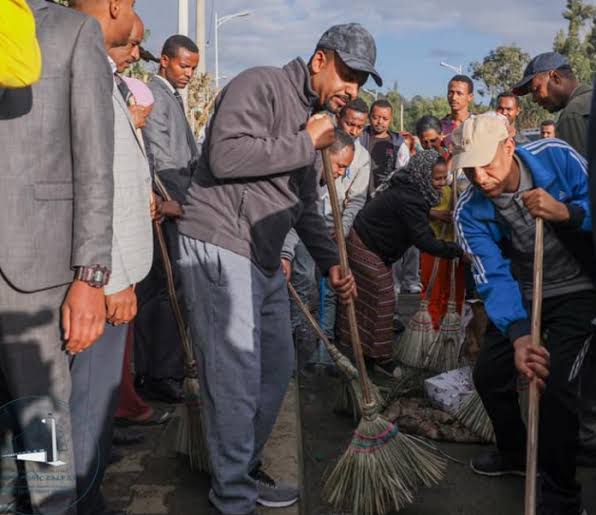
    This piece was first developed six years ago, but its essence and content seemed to have remained untimely to get it publicized. Perhaps, the reason was because those days were when the rule of the game in Ethiopian system of governance has been less human-centered. This time, when the pillar of governance in Ethiopia has reverted somewhat humanistic, apparently with the onset of PM Abiy Ahmed’s rule, articles like this one are absorbing the attention of state politics. The publicity of this piece is inspired most following the recent symposia hosted by Abiy Ahmed (PhD) at his office in the National Palace, themed on how to cleanse Ethiopia from a tide of negative energy upsetting dialogues on national agenda . This piece can be considered a personal contribution on why and how upholding natural laws is a way to clean minds and cleanse spirits to make for civilised dialogues on public affairs. Enjoy full readings!

    Nature Calling

    When I listen to the calls of nature, I hear a scream from all creatures. May be, we feel and hence lend our ears to the human grief only; the suffering of other life is however far from the table of discussions often times. However, unable to speak out their suffering in words doesn’t mean the fauna and flora are passive; a deeper look into the world entails they rather are showing their sufferings in action, calling for a fair world where no life flourishes at the expense of the other; a world which is just not only for humankind, but also for all life; calling for pretty fair allocation of resources in a way that may not affect the health of other living things: big or small, born or unborn, of all the present and future generations.
    I would say, we can realize such a world, at least in Ethiopia. We can make for Ethiopia a land where a fair world for all creatues- be it human kind or other lifes, the fauna and flora. We can realize Ethiopia a land of universal happiness and prosperity.

    Why to Cleanse Our Minds & Spirit?

    Once again, I would say dreaming for Ethiopia free of social, economic, political and environmental woes is not mere wish. As our Ethiopia is our common land, everyone shall have a say in the whole process of towards its construction. And let me say mine (in new paragraphs)
    To realize an Ethiopia where joy, hope and prosperity in abundance requires every Ethiopian on the following two: first, I takes to understand nature – its rules and working principles. I consider this a necessary condition. Second, Ethiopians ought to get ready to sense life to the fullest. And I dubbed this a sufficient condition. The former takes only endowing a deep sense of affection and readiness to lending the required time and energy to make inquiries into nature and its laws. Such a critical look into nature enables to draw a clear depictions of nature: about its purpose, governing rules, and how it works in general. The latter requires lust and determination to practice the dictations of nature and bowing down to its rules, which should be considered as an essential virtue of human being. All in all, a path that takes to our utopia requires us to understand nature; in this regard, two issues are worth remembering: re-defining what life means; and re-statement on civilization.

    An Attempt to Draw on Natural Laws

    What is nature all about? If I may to speak about nature is in a single word, I respond ‘nature as a reality’. Nature is a supreme force meant to keeping the healthy workings of the world, where all life fetches fair share from natural peace. The fact that understanding nature and natural order requires an in-depth look into the visible and invisible world begs the fact that humankind, the only animal with a reasoning power, is endowed with an ability to understand nature and hence privileged with all power and wisdom that enables it control its environment, and govern all other life on earth. When human kind is privileged with these powers, it is not without some strings attached, that is readiness to learn on nature and natural order, which I rather to dub as one virtue of human characters.
    Through its interrelated and sophisticated rules and principles, nature defines and governs the whole aspects of life, of all creatures. The most important governing rules of nature are: ‘extremes are bad’, ‘self-interest is inherent in human nature’, ‘believe in natural justice’ and ‘existence of every creature (species) is for purpose’.
    In our drive towards that dream land, where all life can live in harmony, all it takes is to understand nature, and lend our respect to its rules. This in turn takes redefining life.

    Life Redefined

    Lets for a while, ask ourselves: What life really mean for us; if we are living life to the fullest. No doubt that there is no a commonly shared answer, and it is highly likely that at least every one of us come up with a unique solutions to these problems. If I am supposed to say mine, I say that ability to breathe in and out do not justify one as alive. I understand living as the ability to sense and respond to our feelings: to be able to smell the fragrant or bad odor; to see not only the bold, also the tiny, even the invisibles. In its breadth and width, Life is to cry when one is supposed to cry; to laugh with what makes one laughter; to shout on what one considered as unfair, to suggest for right when one feel an action is wrong, and ultimately to be a voice for a voiceless. I call upon for a revision on the conventional life-death definition, which considers ability to inhale and exhale of oxygen and carbon dioxide respectively. For me, alive are those who are genuine for their heart beat. In alternative words, living is to show a will to accept the reality; understand nature and its rules. It is only when we are in such state of mind, meaning when are really alive, that we make inquiries on the nature and naturalism, and better understand the rules of nature. People are not the same in their understanding on nature, though they are equally endowed with a tool to do so, a reasoning power. As such, peoples state of living shall be stated in terms of degrees. Considering life and death as a ceiling, we have to define other states of living, depending on the extent of ones intelligence over nature and naturalism, the level of ones courage to live by the rules and principles of nature.

    Reinventing the Concept of Civilization

    Human`s control over its environment, which we call it civilization, is nothing but understanding nature and abided by natural order. The right parameter to rely on to rank people in terms of intelligence and societies in terms of degree of civilization is the extent of intimacy they developed with nature.
    Disrespect to the rules of nature is the mother of all woes, in all departments of life: social, economic, political, and ecological at all levels. So we can cleanse ourselves from all these evils once we get nature right: show the will and courage to live by natural laws.

    How to Achieve Social Peace?
    Social chaos that filled our country, Ethiopia would get a cure by understanding the principles of nature. The most important rules of nature that appeals in this respect are: ‘extremes are bad’, and ‘natural justice’. The former calls every Ethiopians be moderate in their social transactions; while the latter connotes that everyone of us rewarded based on our effort and effort only. By offering incentives and courage to behave in a modest and consistent manner, surrendering oneself to ‘extremes are bad’ balances our intra-personal as well as inter-personal relations. By invoking for ‘tit-for-tat’, and the principle of “do not do anything on others what you yourself dislike to happen on you”, belief in ‘natural justice’ is a force behind shaping human conduct as it helps develop moral and ethical values, which are paramount in curbing social problems like jealousy, malfunctioning & corruption, practices of stealing & robbery, and other social malades.

    Towards Just Economic Order

    When we seek for a just economic order, it takes to draw on the righteous motives of economic agents on their material life. A pursuit for fairer economic order also requires to formulate a proper rule of the game in economic transactions, in other words mapping for a proper economic system.

    What ought to the behaviors (motives) of People in their Economic Life?

    In molding the behaviors of people in their economic transactions, people better enjoy their material wellbeing if they cater to the principles of rational selfishness (individualism proper) and thenomics (business simplicity). Understanding the concept of individualism is paramount to guarantee wellbeing of people. Individualism proper is a revisit on the conventional individualism so as forward to people principles to maximizing their material and spiritual gains or restated maximizing happiness. According to individualism proper, the way to achieve happiness is through material- spiritual calculus instead of pleasure-pain calculus, a philosophical line that makes up a conventional individualism. Hence, in contrary to the conventional definition of individualism, which focuses only on material assets, individualism proper connotes for both material and spiritual assets. Therefore the motive behind individualism lies not in the realm of material gain only, but also in spiritual elements too.
    In the process of realizing a happy society, thenomics or business simplicity is another important philosophical line that people ought to adopt to achieve material and emotional wellbeing. Thenomics is how people embrace teachings of holy books like virtues of prudence, temperance, fortitude, justice and humility in their economic life.
    Business simplicity means a new kind of economy is growing in the world with healthy and sustainable products and services of all kinds (home building materials, energy systems, food production, and transportation).

    What should be the Economic Philosophy?

    Alternative modals of production relations we know in history- collectivism, slavery, feudalism and socialism failed to work, in a sense of bringing about the welfare of the mass, for their workings was divorced from the inherent nature of human kind. For instance, take the case of ideological continuum: socialism versus capitalism. By requiring people to be selfless, socialism (communism) underestimated and crushed the competitive force inherent in human nature, and that explains the collapse of socialism. Capitalism, with all its limitations, survives as a dominant economic philosophy for it better acknowledge the psychology (behavior) of human being, which is self-interest.
    However, it takes to understand that the philosophical line that the theory and practice of capitalism built upon has not been in conformity with the dictations of laws of nature. It is undeniable that the actual working of capitalism often passes the natural limit of self-interest (individualism). Not to forget some of its merits, it is my conviction that the whole evils of capitalism are the by-products of corrupt understanding on the concept of individualism.
    Hence, renovating the philosophical roots of capitalism is a milestone towards realizing an economic order that promotes collective happiness. A system of economic governance that appreciates the very nature of humankind, and takes into consideration of changing realities and/or unique features of people and communities (including socio-economic, political, ecological or environmental and technological aspects) is one which better promotes better wellbeing.

    A way for Harmonious Social Order

    The social order in an ideal society where happiness and harmony of people preserved is one which opens little space for social evils. Such a social order involves with rewarding and punishment mechanisms in line with keeping calm and order in a particular society. More specifically, uncluttered simplicity is what matters to promote social harmony, where people avoid of lives that are too busy, too stressed and too fragmented and hence cutting back on clutter, complications and trivial distractions, both material and non-material, and focusing on essentials-whatever those may be for each of our unique lives. In those societies social chaos would get a cure by understanding the principles of nature.
    The most important principles appealing in this regard are ‘extremes are bad’ and ‘belief in natural justice’. The former calls every one of us be moderate in our social transactions-be it in family business, marriage market, social life, or companionship. By offering incentives and courage to behave in a modest and consistent manner, surrendering oneself to ‘extremes are bad’ balances our intra-personal as well as inter-personal relations.
    Belief in natural justice connotes that everyone is rewarded based on his/her effort. That would be crucial in setting accounts on the reward and/or punishment mechanisms in any relationship defined for whatever reasons. For example, as it invoke for principles of ‘tit-for-tat’ and/or “do not do anything on others what you yourself dislike to happen on you”, belief in ‘natural justice’ is a force that greatly shapes human conduct as it implicates for moral and ethical values that would be interpreted in implicating such traits powerful enough that help balance in case of overlapping interests or antagonism among individuals (groups of people) like: tolerance, make compromise, value for mercy, denial of revengeful actions, cooperation, loyalty, trustworthiness, and integrity, among others. The end result would be regulating relationships so as to give them pacific and enduring, creating harmony of interests while undertaking any social business.

    Towards a Pacific Political Order

    A political system is perhaps a number one determinant of the well-being of people. In the process of building the economic and social order that makes up a happy society, it is up to the keen interest of political governance. To promote collective wellbeing of people, the political governance shall be structured in a way that promote Good Governance Government. With the end objective of the political system is realizing a good governance government, the philosophical lines may vary depending on a number of circumstances including, but not limited to the following: i. the mindsets of governed; ii. Unique socio-economic and socio-cultural institutions; iii. Historical realities and contexts that in one way or the other conducted the nature of relationship between different segments (social classes) consisting the larger mass of the population to be governed.
    Having those mentioned elements, the political system has to value for the following three: value for free society; second, value for knowledge; third, enlightening the society. As its primary responsibility, the political system is one which one which promotes free minds, as it necessitates from the very nature of human kind, which is self-love. Political systems that deviate from those mentioned lines would be responsible for making peace scarcer and human grief abundant.
    The second aspect of a political system that promote collective harmony of the ruled is value for knowledge. When I say knowledge is valued, I mean the principle-knowledge is power-get strictly adhered in running the state machines and hence shape the course of public life. Hence, the political system should be committed where the education system is an instrument for behavioral change; also it should free education from getting politicized. The political system has to be dedicated for meritocracy prevails to run the state machines, its institutions and the bureaucracy at large.
    Under a system of political governance meant for collective harmony is mass enlightenment. The manifestations of that is public investment in endeavors that enhances the consciousness of citizens. Hence, the end objective of education would be beyond acquainting students’ skills of writing and reading to make them understand subject matters. As such, the purpose of the education goes to make students value for the following: virtues of intellect like skepticism, sense of belongingness to societal and national affairs, cherish the principles of global citizenship, stand firm to defend the public quests, develop such skills like culture of reading. The education system is also one which discriminates the workings of moral laws over positive laws, so as to hold people morally and ethically responsible and disciplined accordingly. This in turn is paramount to promote traits of good characters like loyalty, integrity, tolerance, sense of brotherhood, loyalty to ones causes and public interests. Moreover, the education system would be structured in a way students grow up by exploring, understanding and bow down to natural laws; informed of their cultural and historical backgrounds, among others.
    In an effort to promote enlightenment, the government should commit resources so that art and artistic works get value. As art plays key instrument in enlightening societies, the government, apart from investing public resources, should provide special incentives for art sector and those involved in it.
    In line with the aforementioned goals of the political system, the objectives of government under the natural political order are three. The first would be working for the natural political order to prevail. Second, cultivate the ground so as naturalism hold. This is through fulfilling the preconditions prevalence of natural order requires, like advocate for natural laws, awakening the society to explore, understand and abided by natural laws. Third, as citizens are not equally literate and consciousness, narrowing this gap among citizenry should take key task of government.

    Making for Ecological Order

    To promote ecological order it takes to live by the principles of ecological simplicity. Simplicity means to choose ways of life that touch the earth lightly and that reduce our ecological impact on the web of life. Hence, simplicity encourages us to connect with nature, the seasons and the cosmos. Ecological simplicity feels a deep reverence for the community of life on earth and accepts that the non-human realms of plants and animals have their dignity and rights as well the human.

    Once we Get nature triumph, once we accept and bow-down to natural laws, once we accept the reality, then we are on the right path to achieve our dream land, an Ethiopia where joy, hope and prosperity in abundance in all aspects of life: social, economic, political and ecological.
    .

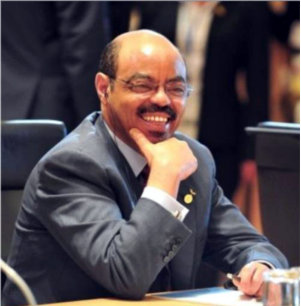
  • UNDERSTANDING MELES ZENAWI (1955-2012)

    By: Habtamu Girma, Lecturer, Department of Economics, Jigjiga University, Ethiopia

    Note for Readers

    Part of this Piece was published on September 9/2017 issue of Addis Fortune NP. It can be accessed online via this link: https://addisfortune.net/columns/to-unravel-meles-thought-processes/

    Introduction

    Five years on since his untimely death, aged 57, the name Meles Zenawi is still active in Ethiopian political discourse. Ranked as a ‘Great Leader’ posthumously by the supreme power of the land - the House of Peoples Representatives, such a rank was unprecedented by any leader at least in the modern history of Ethiopia that counts back roughly since the Mid-19th Century. The title ‘Great Leader’ marks two things. For one, it is meant to honor one’s outstanding leadership quality. At the overleaf is the immense influence of the man. While the capacity of Meles as a leader has many critics, his influences in his own ways is uncontestable.
    Meles has been such an influential figure that he was able to institutionalize his thoughts, conceptions, and even personal behaviors installed to spin the Ethiopian historical, political, legal and economic path.The influence remain intact even after his death, With the thoughts of Meles Zenawi set to rule the country for foreseeable future.
    Sophisticated as his conceptions were so for his supporters, the personality of the man is equally cloak for his critics. Some branded the late Prime Minister as selfless, pragmatic, and democrat, there are also people who rather depict the man as eccentric, dogmatic, and undemocratic. With all that featuring the most influential but controversial leader, understanding Meles means understanding the political economy of Ethiopia, at least in the past quarter of a century since 1991.
    Indeed, to make a proper inference on Meles Zenawi requires to go beyond conventional biographic sketches. To draw inferences out of the life and works of Meles, it takes to be investigative. Perhaps, the trademarks of Meles from both sides of narratives about him ascribes to his grow-ups as a school boy. The backdrop of his personality is also lies in his years of armed and politcal struggle, which accounts almost all his youthhood and adulthood. A particular imoprtance in this regard is Hegelian philosophy and its Marxist-Leninist extensions of the exploiter-exploited dictum and the concept of Material determinism.

    Meles as a School Boy

    The personal memories of those who share same playfields and classrooms with him as boyhood attests that the foundation of the personality of the man as a politician and statesman were deep rooted. For his fellows at play yards, it was an adventurous boy, who used to try out what they didn’t dare, that they most remember about Meles. The extension of such personality is likely behind bolder policies of Meles, which often challenge the traditional or customary states of affairs as untouchable. The leader even came up and insisted on ideas largely dubbed as dangerous – the likes of ethnic federalism.
    A curious student remembers Meles as a schoolboy, who used to spare much of his times in his career reading and studying. For a leader who is widely celebrated as wise, tireless and workaholic, those traits were worked out. Often described by those who were close to Meles as a man solid to his ideals, such personality is rather grown up with him. His mother once described Meles as a boy who was extremely resistant to be appear weak or outsmarted by others of his ages. His teachers also recalled Legesse Zenawi – the school name of Meles – same old as a politician and statesman, someone who always work on to find himself excelling (over his contenders) in debate sessions, a student exhaustive enough to defend his line of arguments. Perhaps the extension of that is his political personality, with which his political contenders always cry foul for his alleged political tackles.

    Meles and the Hegelian Philosophy

    A careful look into the thoughts of Meles virtually on every subject of political economy entails Hegelian philosophy is at the heart of his explanations and/or narratives.Many describe Meles’ policies as adventurous’ for intermingle of ideas or concept widely regarded as irreconcilable, Hegelian philosophy seems to have shaped how the man think. According to the Hegelian philosophy, a certain subject or concept is a synthesis of the two opposing sides – the thesis and ant-ithesis.
    A leader often portrayed by his political rivals as a ‘reactionary’ or as his adherents call him ‘pragmatic’ for jumping on opposite corners of ideological lines, Meles always tangled, and knows how to do so, to breed ideas on the opposite corners to give up a new synthesis. His political and/or economic philosophy is the product of such a synthesis of concepts which appears largely opposing.
    While conceptualizing democracy, Meles adheres to Revolutionary Democratic concept, which merges two concepts often portrayed repelling, ‘Revolution Versus Democracy’. In laying his vision for his country as a political leader is built upon a principle ‘Unity through Diversity, an emblem subjected to wide array of critics for magnifying ethnic nationalism at the cost of ‘Ethiopian identity’. For Meles, his ethnic based political line rather cement the cohesion of diverse groups of Ethiopians. The extension of such conceptions of Meles gave rise to most condemned constitutional articl, article 39 of the FDRE constitution, which stipulates the rights of Nations, Nationalities and Peoples (NNPs) to self-determination unto and including session. Meles always argued article 39 is a warranty for NNPs to live under one roof, which dries the roots of mistrust and hostility among the diverse ethnic groups averting the possibilities of political system of one ethnic group domination in the future Ethiopia.
    Contradicting the conventional narratives on Developmental State Paradigm and Democratic Systems, which outlaws for any possible go-with of the two, Meles has come up with a new conception stating ‘Democracy could be maintained while Developmental state paradigm being the rule of the game’. Indeed, Hegelian philosophy explains the synthesis of Democratic Developmentalism (DD), a brand-new philosophical line of economic, political and bureaucratic system of governance which is credited to the late Meles Zenawi.

    Meles a Socialist

    A leader as ‘reactionary’ for some and a ‘pragmatic’ for others, Meles has always been portrayed man with double faces – as a socialist and capitalist. For his political opponents mostly from his party, TPLF (EPRDF), Meles was treated as subservient to imperialists upon his departure from Marxist-Leninist lines. The opposition political figures on the other hand accused Meles who trades in the name of democracy and capitalism, chractrizing him as a socialist and as a dictator. Actually, the revolutionary democratic leader borrowed socialist and a capitalist ideals in his theorizations and policies.
    If it takes to mention one about the Socialist face of Meles Zenawi, it would be his adherence to the concept of material determinism, a methodological tool scientific socialism relies upon in its narratives on every subject of political economy.Material determinism entails that every aspect of life be it – history, socio-cultural, moral standards, political system, wellbeing and security – is predominantly shaped by material or economic forces. Indeed Meles embodies economic forces as fundemental, perhaps as his governance envisioned to build up of one economic community. Worth noticing is Meles was curious about where and when material determinism appeals. For instance, as opposed to Marxian narrative of history, dialectical materialism as it is doesn’t explain the Ethiopian history, the historic relationships among nations, nationalities and peoples of Ethiopia. With Meles` narrative on Ethiopian history goes exploiter-exploited dictum on account of cultural or religious domination of one ethnic group – it is resounding that Meles having been realigned Marxian tool of conceptualizing history, dialectical materialism. The modification Meles has made was to redefine the form of relation in the exploiter- exploited narratives of history with the Amhara ethnic group at the corner of exploiter (dominating) for it has imposed its language (Amharic), culture and religion (Orthodox Christianity) over other Nations, Nationalities and Peoples. This historical conception is by far the foundation of the political philosophy of revolutionary Democratic Party and its government, for which Meles was the ideologue.

    Meles and the Ethiopian Political Tradition

    Though Meles disregard dialectical materialism to explain Ethiopian history, he doesn’t rules out it altogether. Unless for the installment of a political system that works for a just economic order which benefits all Ethiopians, such an exploiter-exploited sort of relationships is inevitable. Realizing such a political system which targets to end elitism ,is the backdrop of ideals of revolutionary democracy, which in the mean time have graduated to take the pillar of ‘Democratic Developmentalism’. Meles waging war against elitism,his revolutionary Democratic Party sets to empower the ‘mass’ – the rural peasants and urban proletariats – with civil, political and economic rights, it is inevitable for some sections of the society to lose in the process. Such explains the friends-foe dictum to have been taken for granted to model on Meles and his leadership.
    More specifically,such narratives behind the dominant critic over EPRDF for an alleged ‘deliberate’ disempowerment of certain sections of society – mainly the urban intellegensia, depriving their settlements – selected cities and towns defined to be their powerhouses and their livelihoods. Meles and his party, the EPRDF always deny those allegation justifying their moves to fix the economic imbalances skewed in favor of urbanites and urban sectors, alienating the rural peasantry, as a results of the ‘ill policies’ of past regimes. A reflection of that is the two contrasting views on revolutionary democratic leadership in rural and urban Ethiopia, with the rural peasantry in love and the urban intellegensia in loath with EPRDF. Another reminder on that is popular impressions on Meles, which is all dual and polarized, as a figure you love him or you hate him with a passion, you admire him or loath him with a passion, you agree or disagree with him with a passion.
    Worth important of all is that those who love or loath Meles seems to have little credentials in their labeling. With the prevailing political system largely featured by elitism, they are few groups either in support or opposition who have all the means to twist and turn politics, with the larger populace kept passive.As the political history of Ethiopia recount, political showdowns among the elites with their pull and push for the hegemony of power, have been taking the larger Ethiopian populace up and down. In the face where Philosophy, logic and/or principles to have been little to conduct on the two sides of the political game, what would give a relief for the people of Ethiopia is nothing but a strong man or political group able to deal the hostile and rocky political landscape in his(its) own way and appear up front to dictate.
    Perhaps, such a value judgment may be unjustified by standard political theories and/or norms as the Ethiopian political system does so. Political monopoly featuring the Ethiopian political system, with the political tradition full of hatred, hostilities and play-offs, it is unfortunate that that such is how political stability would be achieved. Indeed, a fairer reflection on Meles Zenawi and his governance needs to be cognizant of this fact.

  • AN ATTEMPT TO REDEFINE INDIVIDUALISM

    The Essence of Rational Selfishness

    Habtamu Girma, Lecturer at Jigjiga University, Department of Economics.

    Note to Readers: Part of this Article was first Published on August 13, 2016 by The Reporter Ethiopia, Addis Ababa based Weekly Newspaper. It can be accessed following this link for online readings:

    https://www.thereporterethiopia.com/content/attempt-redefine-individualism

    Introduction

    Perhaps, no other people than economists, are more concerned with the concept of individualism. In fact, mainstream (orthodox) economic theories are designed based on the rational actor model. At the heart of the rational actor model is the notion of individualism. As a byproduct of this economic modelling, orthodox economics and neo-liberal economic orders takes individualism a pillar in their theorizations and policy prescriptions. Though colorful and smart looking, however, those teachings and policy recommendations has been criticized in many terms, particularly since the last two decades or so. This article argues that all those woes against mainstream (orthodox) economics is due to the ill-defined individualism that its theories and policy prescriptions rooted upon; and pin points redefining individualism as a way out. Moreover, this piece attempts to forward brief sketch into the whereabouts of the short comings of orthodox economics; pinpoint consequent socio-economic end-ups of conventional economics and highlight how the re-statement on individualism would mitigate the drawbacks of mainstream economics, both in theory (academic) and practice (policy) fronts.

    What is missed in the Theory and Practice of Orthodox economic Thought?

    Critics say mainstream economic theories are irrelevant to contexts of developing countries, with their lines of argument resting up on the following, among others: the very assumptions of orthodox economics like rational actor model, assumptions of well functional soft and hard infrastructure, full-fledged legal and institutional set-ups, etc…. do not feature the contexts of developing countries. In the policy fronts, neo-liberal economic order is condemned on similar grounds: where critics puts neo-liberalism a device whereby the western world sustains its colonization against the other world, a systematic tool to effect the so called ‘post-modern colonization’. In the earlier days, where the western world a sole super power, challenging mainstream economics was punishable harshly. In the academic front, those who make ideological critic on neo-liberal teaching were fired from colleges, and even from academia. In one of his interviews, some 12 years back, a well acclaimed Ethiopian economist professor Birhanu Nega said that in U.S.A academic politics was even intense than the state politics. In the policy dimensions, countries were forced to swallow the neo-liberal policy guidelines as part of their economic policies, a string attached to get access loans and aids. Overall, neo-liberalism, both in its theory and practice, is condemned for rigidity, and its ‘one size fits all’ principle

    Classical Thought on Individualistic Motives

    Economists define individualism as one`s lust for material gain. The famous British political economist, Jeremy Bentham, modelled human nature as governed by pleasure-pain calculus. This modelling puts human kind as an entity that chases pleasure and shy off pain. Such understanding of human behavior is what the mainstream economics is rooted upon. Accordingly, classical economics, the ideological foundation of capitalism (neo-liberalism), connotes that it is material gain or loss what defines pleasure or pain.
    But it is wise and appropriate to ask: does the only means to pleasure is a material gain? Are there not instances where people may (in fact they do) forgo material interests for their ends i.e. pleasure? Do pleasure-pain modelling of human behavior explains such circumstances? Conventional definition of individualism do not have a complete answer for those quests, calling for revision of individualism.
    It is true that the end goal of people in life is to gain pleasure, and avoid pain. However, material gain do not necessarily justify pleasure as there are occasions where material loss may justify pleasure too. The famous pleasure-pain divide is unable to explain why some people prefer to scarify their material gain to gain pleasure. This makes the Pleasure- Pain divide blurred, which in turn leaves the conception of individualism unclear. All in all, individualism defined based on the pleasure-pain calculus is incomplete, if not right. In other words the famous classical notion of rational actor model (which is powered by the philosophy of pleasure-pain calculus) and the implied inferences and/or policy regimes are subject to doubt. Hence, the conceptions of mainstream economics on individualism has to be revised.

    Individualism Redefined: Individualism Proper

    No doubt that the end goal of every activities of a human kind is to maximize welfare and minimize pain. The key aspect here is as to how people gain (acquire) pleasure (and hence try to avoid pain). Not missing the point that conventional understanding of individualism is blurred, this article eyes an alternative to pleasure-pain divide in a bid to redefine individualism in more complete form, which I shall call it individualism proper.
    In contrary to the conventional definition of individualism, which focuses only on material assets, individualism proper connotes for both material and spiritual assets. Therefore the motive behind individualism lies not in the realm of material gain only, but also in spiritual elements too. Therefore, the virtue of individualism rests upon material-spiritual calculus, instead of pleasure-pain calculus. Such understanding of individualism is the first step in re-defining the notion of individualism, and hence understand what individualism proper is all about.
    Explaining the material-spiritual gain requires clearing one bar: defining the possible interrelation between material gain and spiritual gain. It is my perspective that the possible links between material and spiritual gain may take three forms: competitive, complementary, or unrelated. When material satisfaction and spiritual satisfactions are intersected, material satisfaction may results into spiritual satisfaction, or the other way round. Where the two assets are unrelated, material gain do not compromise the spiritual gain or the other way round. There are times when material gains and spiritual gain may go in conflict, making the decision to locate oneself to material or spiritual element difficult. Under such instances, spiritual gains should get the priority: for one, spiritual satisfaction is enduring than material satisfaction; besides, spiritual gain is a pre-condition to material gain.

    Dimensions of Individualism Proper

    To better understand self-interest, individualism proper establishes three interrelated dimensions:- the socialistic dimension, moralistic dimension, and spatial & time dimensions. The particular nature and implications of these dimensions integral in individualism proper endows individualism proper flexibility character, a trait conventional individualism seriously lacks. The flexibility character of individualism proper reveals itself in reasoning out and hence explain instances when people deliberately scarify their material interests to achieve pleasure (satisfaction). All in all, individualism proper widens the scope and motives of self-interest, resulting a broader and holistic understanding of individualism.

    Socio-Cultural Dimensions

    The rationality assumption of conventional economics, which considers people are individualistic and hence act with no bothering about the social and cultural influences they may face, is far less realistic. Such a look relegates socio-cultural and religious elements in economic life of people, despite their importance. Moreover, this fallacy is the source of corrupt understanding of individualism.
    Socio-cultural and religious values like: social norms, customs, cultures, beliefs, religion are powerful forces in governing the economic life of people. As human is a social animal, people cant escape the influences of socio-cultural elements and considers all these components into consideration in their economic transactions. By sticking to these values, people are enhancing and sustaining their economic gains, which in fact amounts to self-interest. When we say peoples conducts in economic life is shaped by socio-cultural and religious entities implies people values these entities.
    It is ones creed to his/her values that defines his/her individualistic nature. Possession of values is what defines the rationality of people, and how far people are loyal to their values would tell the extent of their individualistic character. In general, at the heart of individualism proper are Values

    The Moralistic Dimensions

    In the context of individualism proper, the aim of self-interest is to maximize material and spiritual gain. In pursuit of that, people always try to live up their values. As values are subjective, i.e differ from people to people, we limit ourselves in the realm of moral values, which in fact shall be understood on grounds of humanity and equated accordingly. The moralistic dimension of individualism proper is its presumption that people are in many cases determined to living up their moral values. By doing so, they maximize their economic wellbeing. The key issue here is to look for how ones determination to surrender himself/herself to his/her values boost up material gain. People live up their values means they never go into conflict with themselves, meaning they gain inner peace. People live up their values means they fulfill the pre-requisites for success i.e mental peace. Once we are in such state of mind, we are able to develop the three ingredients of success in material life: free mind, vision, spiritual strength or courage (industriousness). Hence, lust for once loyalty to values is individualistic move (self-love), and is instrumental for prosperity.
    According to individualism proper, there is a room that self-interest and altruistic values go parallel. If one values altruism (i.e if it is genuine, not in fact for mere show-off) it is action for self-satisfaction, or fulfilling self-interest. By living up this value, an altruist person is self-interested as well; to borrow some words from Aristotle, altruism is rational selfishness. Therefore, if people seems to scarify their material life, that is a civilized (strategic) retreat from material interest, for it is a retreat to comfortably and sustainably grab material gain

    Spatial and Time Dimensions

    Socio-cultural environment is different among communities, and the values of people change with time. Hence, values are subject to variation among people belonging to different communities; their motives in their economic life i.e their self-interest changes through time too.
    Overall, sticking to individualism proper will address the roots of doubts on economic theory (economics discipline) and practice (economic policy). As such, economic theorizations and policy outcomes of individualism proper will scale-up the socio-economic welfare of people.

    Individualism Proper: A Better Way to Economic Theory and Practice

    Given the fact that orthodox (mainstream) economics, powered by conventional individualism, has been powerful in shaping economic theory and policy for long, the re-definition of individualism in the sense of individualism proper has a number of implications. In the academic arena the teaching of economics needs redesign in terms of content and approach. Content wise, a single economic theory and/or model might not work at all times, at all places. In terms of approach, deductive approach, the dominating school in mainstream (orthodox) economic thinking should at least be complemented by (if not, give way to) inductive reasoning, in the construction of economic theory and modelling.
    From policy perspective, individualism proper connotes for a revision of the policy regimes mainly one size fits all principle of orthodox economics, calling for contextualizing economic policies to particular economies` socio-economic, political, ethico-religious and cultural contexts.

    Individualism Proper: A Better Way to Promote Wellbeing of People

    How Individualism proper promote the welfare of people could be best illustrated by looking at the drawbacks of conventional individualism, as the weaknesses of individualism in its traditional sense are the strengths of individualism proper. The practical example as to how ill-defined individualism affect the people by depriving their economic and social enterprises can be seen by looking the American society.
    Gauged by the scale of materialism, the Americans are the most individualistic people in the world; at the same time, they are the most altruist people on earth. The Americans cherish their individualistic values the secret of their economic prosperity. However, the American form of individualism is problematic, as it never fits the human nature. Indeed what defines humanity is not only the material life, but also the spiritual life. The Americans ignored or missed the spiritual values at all. That is why they are not as prosperous socially as they are economically.
    I can say the American society is the most socially deprived one in the world. The American society do not allocates the necessary time needed for social business, making the society poor in social capital. The ill-defined individualism they worship has left the Americans to multitudes of problems. Over emphasizing the material world and ignoring the spiritual assets, the American society is most infected by the disease called- stress. Stress is the mother of not only every biological disease, but also of many social diseases ranging from drug abuse to robbery to serious crimes to terrorism.
    The institution of marriage, which is the basic construct in the formation of society and country, is most damaged by the notion of ill-defined individualism. According to one research, an average Americans dual income couples talk to each other only 12 minutes a days.
    Exaggerated attractions of Americans to material assets exposed them to arrogant businesses, which uses advertisements as a tool to play their game. Perhaps cheated by these advertisements, most Americans are affected by such habits that going to the markets for commodities which are not necessary to them. Over-purchase habits, especially in food items is seen as the average American family dumps down 25% of the food stuffs it purchases. The per-head consumption of drug makes Americans the highest consumers of ‘bads’ in the world.
    A philosophy to convert economic prosperity into social stability is farfetched. Trying to treat social diseases by economic tablets will not bring a lasting cure except helping relieve the pains associated with the symptoms. The Americans may have a material resource to treat their disease. Yet they are treating simply the symptoms, not the causes of the diseases (both biological and social diseases) they are suffering from, which is stress. They don’t get the cure unless they treat their mind sets and redefine what meant by self-interest in line with individualism- proper.
    It is worthy to understand that self-interest, in the form the Americans understand, can potentially hamper economic progress. At the state level, government investment to treat social evils ranging from drug trafficking to robbery would create huge pressure on the economy. Richard Nixon, the president that ruled U.S .A between 1964 and 1974 has spent more than $ 1 trillion to fight drug abuse. The U.S has the highest incarceration rate in the world, spending billions of dollars to care for prisoners. Fighting terrorism has cost U.S.A trillions of dollars in the past decade.
    An average American spends much time and more money to medication than anyone anywhere on our planet. More money spent for medication means fewer resources for productive investment; time reallocated from work places to hospitals means fewer hours on work, shrinking their income and productivity. By living up individualism proper they will not only bring social prosperity, but also enables them at least to keep up the economic prosperity they enjoyed already.
    All in all, if we understand and adhere to the principles of individualism proper, we are in a better position to recognize how to build our material, spiritual and emotional assets, promoting socio-economic prosperity.